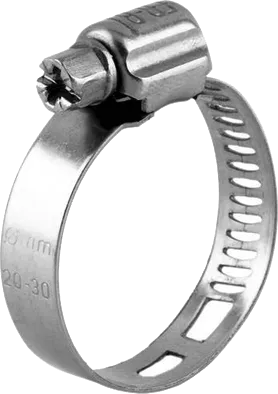
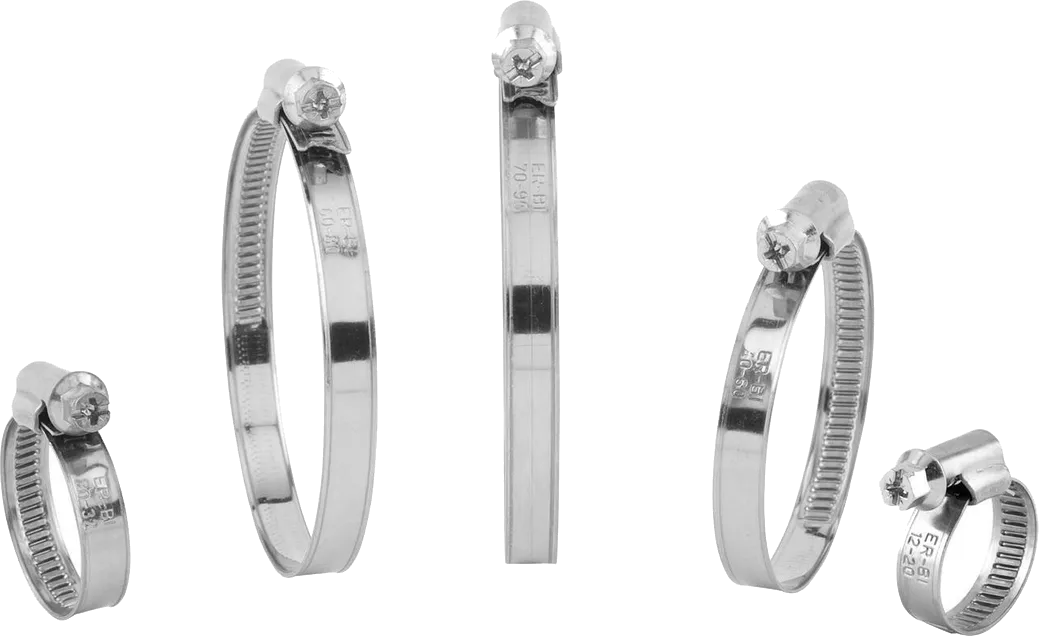
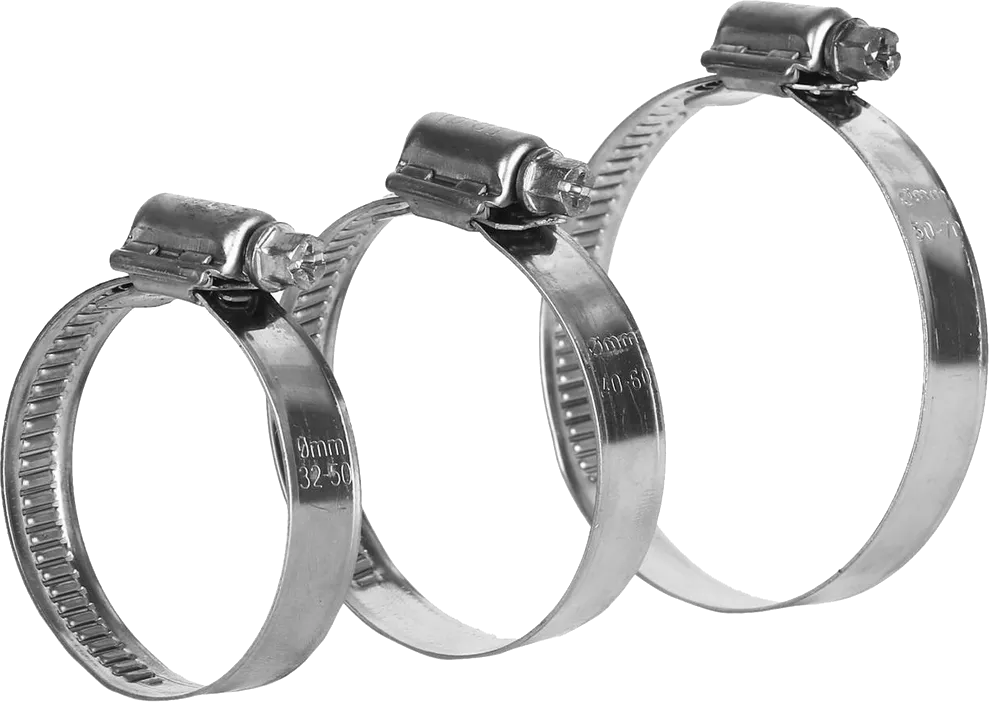
Before you start
- Check the size: The outside diameter of the hose fitted on the spigot should fall in the middle or upper part of the clamping range. If in doubt, use the size finder.
- Clean hose and spigot: Oil, paint residue and burrs spoil the seal.
- Push the hose fully home: The hose must pass the bead of the spigot completely.
Step by step
- Open the clamp and slide it over the hose, with the screw where it can be reached easily later.
- Position the clamp 3–5 mm from the hose end, behind the bead of the spigot. Too close to the end, the band can slip off the hose.
- Run the screw down by hand, then tighten with a socket or screwdriver.
- Do not exceed the catalogue tightening torque. For ER-Bİ Type A clamps it is 3–4 Nm, for Type B 6–8 Nm; the values are in the table on each product page. See the tightening torque guide for details.
- Check the connection after the system has run, especially after the first heating and cooling cycle.
Common mistakes
- Over-tightening: The band cuts into the hose or the thread strips. More torque does not mean a better seal.
- Clamp too large: At the lower end of its range the band end protrudes and the pressure becomes uneven.
- Perforated band on soft hoses: For silicone and thin-walled hoses, embossed bands such as Type C or Type D are the better choice.
- Impact wrenches: They give uncontrolled torque; use a torque-controlled tool. The recommended tightening speed in series assembly is 300 rpm.
Re-use
Worm drive clamps can be removed and re-used. Replace the clamp if the band is deformed, the thread is damaged or corrosion has started.