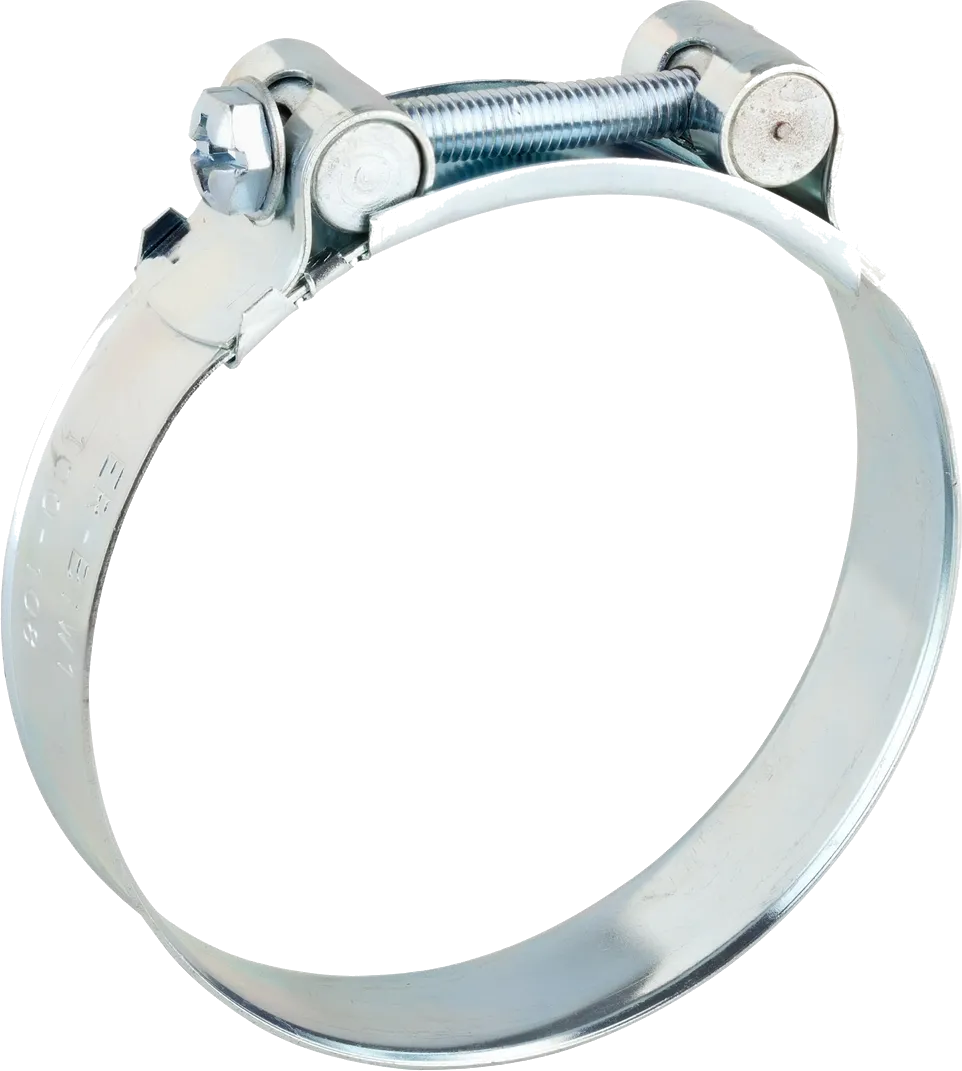
Heavy Duty Bolt Clamp
Heavy duty bolt clamp with bolt-and-nut closure; 14, 18, 20 and 25 mm band.
W1W2W4 106 × Ø
In construction machinery, agricultural vehicles, generators and commercial vehicles, hose connections face high pressure, shock loads and constant vibration. With a wide band and bolt-and-nut mechanism, ER-Bİ heavy duty clamps deliver far more clamping force than worm drive clamps.
Heavy duty bolt clamp with bolt-and-nut closure; 14, 18, 20 and 25 mm band.
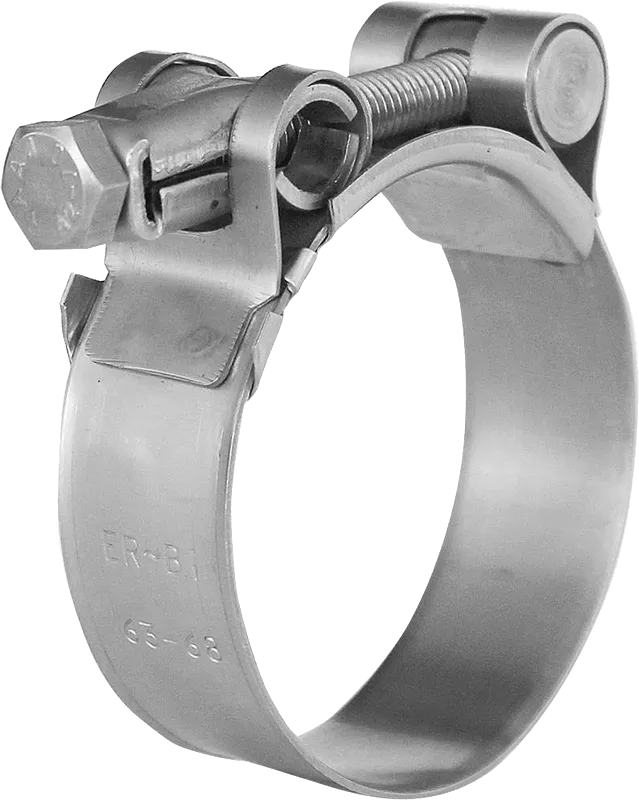
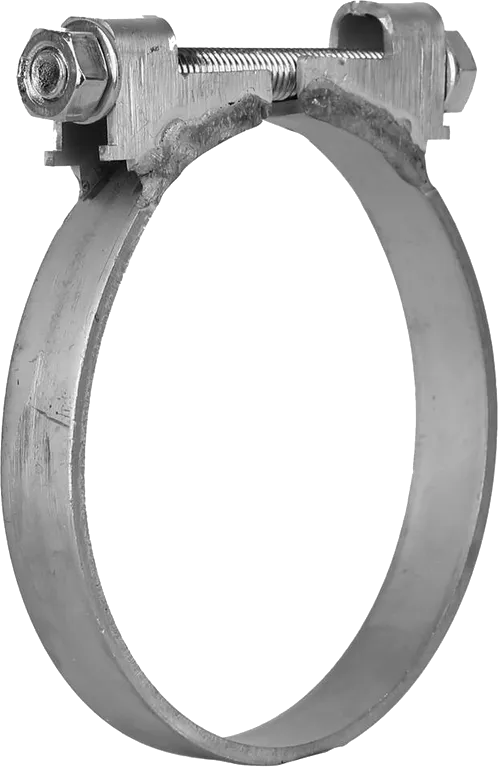
Our heavy duty clamps are produced in 14, 18, 20 and 25 mm band widths, in W1 (zinc-plated), W2 (430) and W4 (304) grades. T-bolt clamps are available in 304 stainless steel in standard sizes from 29 mm to 323 mm.
Heavy duty clamps are fitted with a socket wrench or a cordless nut runner. Position the clamp 3–5 mm in from the hose end and behind the bead of the fitting; on silicone hoses, re-check the tightness after the first run.
The heavy-duty clamp page lists 106 sizes; standard catalogue sizes cover Ø13–252 mm. Choose the clamp so that the outside diameter of the fitted hose falls near the middle of the clamping range.
The salt spray test hours of each grade are listed in the materials tables on the product pages.
Select the sizes you need for heavy-duty connections in the quote form to request prices, or send a custom manufacturing request for special band widths, bolts or coatings.
Heavy-duty clamps use a wide band and a bolt-and-nut mechanism to deliver far more clamping force than worm-drive clamps. They are chosen for connections with high pressure, impact and constant vibration.
On the highest-pressure lines such as turbo and intercooler connections. T-bolt heavy-duty clamps are all 304 stainless and are tightened with a T-bolt.
Our heavy-duty clamps are made with 14, 18, 20 and 25 mm bands. A wider band spreads the pressure over a larger area of the hose; wide bands are preferred for large-diameter and thick-walled hoses.
Our exhaust clamps are made of W5 grade AISI 316 stainless steel and suit exhaust lines exposed to high temperature and road salt.
With a socket wrench or a cordless nut runner. Position the clamp 3–5 mm in from the hose end and behind the bead of the fitting; on silicone hoses, re-check the tightness after the first run.
A drawing, a sample or just a size — send it over and we will prepare your quote.